
Introduction

1
The Will of the People
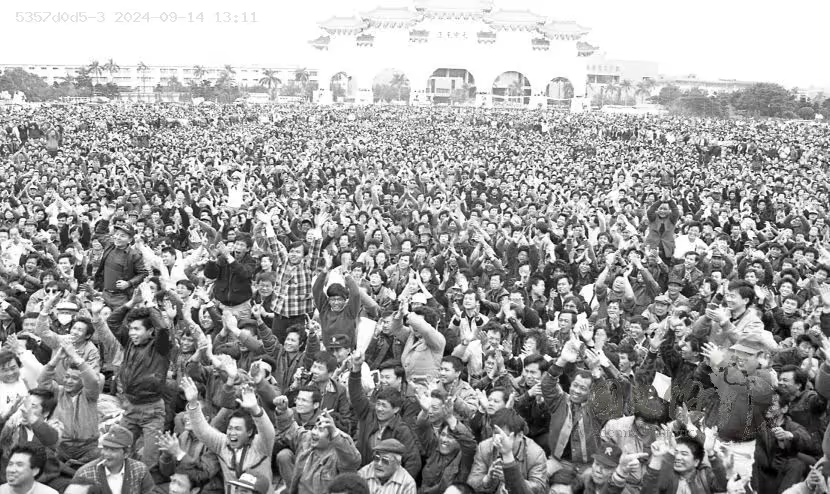
In March 1990, university students and civic groups converged at Taipei’s Chiang Kai-shek Memorial Hall to protest that—even after martial law ended—presidential elections were still determined by so-called “eternal legislators.” The demonstration later became known as the March Student Movement, or Wild Lily Movement.
(Taiwan Shinsheng Daily / Academia Historica)


Can ordinary people change history?
On March 23, 1996, when many people in Taiwan walked into polling stations, they may have felt that they were making history. That day marked the island’s first direct presidential election, with over 10 million people venturing out to cast their votes.International media from around the world arrived, drawn by curiosity about this seemingly improbable emerging democratic nation.
Not long ago, this country had been under martial law—a regime that had lasted 38 years since 1949. During this period, citizens’ rights to express political opinions were severely curtailed; freedoms such as publishing newspapers or forming political parties were restricted. Criticizing the authorities or voicing dissent could lead to arrest, imprisonment, or even death.
It wasn't until 1987 that the martial law was finally lifted. Yet in less than a decade, Taiwan underwent a profound transformation from dictatorship to democracy—a monumental change that some have hailed as a miracle.

Diego Ruschel / public domain
這是近代國家進入臺灣的第一步,卻也對在地平埔族帶來改變。

Jan van Baden / public domain
鄭軍圍攻熱蘭遮堡將近一年後荷蘭投降。荷蘭聯合東印度公司的臺灣長官揆一所著的《被遺誤的臺灣》書中描繪此景。

《平定臺灣戰圖》 / public domain
在其統治期間,民間的暴力與反叛事件不時發生。圖中的林爽文事件是臺灣規模最大的反清事件。

《史蹟調査報告 第1輯 北白川宮能久親王御遺跡》 / public domain
《馬關條約》簽訂後,日本派遣近衛師團接收臺灣,與各地的反日武裝爆發衝突。圖為師團登陸澳底(今三貂角)後所攝。

黃榮燦〈恐怖的檢查〉 / 臺南研究資料庫 / CC BY 3.0 TW
行政長官公署作為管治臺灣的官方機構,統治期間卻問題頻頻,最終引發二二八事件,大量民眾遭到軍隊的無差別屠殺。
In Asia, Taiwan stood out as both unique and pivotal. In the 1990s, amid the collapse of the Soviet Union and the rise of Francis Fukuyama’s “end of history” thesis—which suggested that liberal democracy was the final form of government—democracy seemed destined to prevail. However, a contrasting argument soon emerged, contending that democracy was incompatible with the so-called "Asian values" and could not be applied to Asian countries.
After enduring layers of colonial rule, it seems almost unimaginable that one day the island’s people could peacefully cast their ballots—vote by vote—to choose their own leaders, express their views, and shape the course of their nation.
Yet, this very possibility became reality. In the days to come, every four years a presidential election has been held—again and again.
The Taiwanese didn’t merely elect a president; they also chose mayors, local officials, and village heads, and even participated in various referendums. They learned to weave democracy into the fabric of everyday life.
Democracy is no miracle; it is a marathon that demands long-term perseverance and constant adjustment.
For many first-time voters, the process of voting might seem unremarkable and fleeting. The entire process—from entering the polling station, receiving a ballot, marking it, and depositing it into the ballot box—could take less than a minute. Yet, this seemingly simple act ultimately accumulates into an formidable force that determines Taiwan's destiny.
History, in some ways, resembles elections. It is built upon seemingly inconsequential actions and wills of individuals. No one can predict the outcome until every vote is counted.
On the evening of March 23, the election results were announced. Over 5.8 million people cast their ballots for Lee Teng-hui, the Kuomintang candidate. With 54% of the vote, he became Taiwan's first democratically elected president. Notably, Lee had already been serving as president under an authoritarian regime for eight years, so his victory marked a pivotal step in transforming autocratic rule into democratic legitimacy.
That night, outside Lee‘s campaign headquarters, flags waved, and fervor filled the air. The people's will was on full display.
Next section
在帝國的陰影下
scroll to continue
2
Under the Shadow of Empire
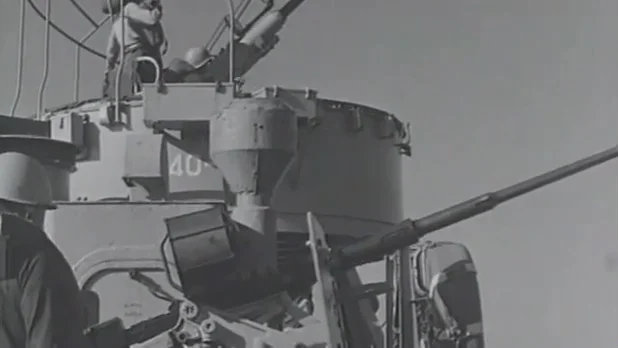
On August 23, 1958, the Chinese Communist forces bombarded Kinmen, prompting civilians and military personnel to launch a movement supporting the front lines.
(Collection of the Taiwan Film and Audiovisual Institute / Open Museum)
Yet, the presidential election was not simply a tale of triumph and jubilation. On the eve of the 1996 election, the specter of war loomed over the Taiwan Strait.
In July 1995, Lee Teng-hui—then the incumbent president—visited the United States and delivered a speech entitled “Always in My Heart” at his alma mater, Cornell University, where he elaborated on Taiwan’s evolving democratic journey. The People’s Republic of China (PRC)—which has long sought to annex Taiwan since it defeated the Kuomintang during the Chinese Civil War in 1949, prompting the latter to flee to the island—responded vehemently by launching a series of military exercises near the Taiwan Strait.A year before the incident, a best-selling book titled The August of Leap Year 1995 had swept through Taiwanese society.
The book detailed a hypothetical plan and process for a Chinese Communist invasion of Taiwan. According to the author, the Chinese Communist Party (CCP) had long planted operatives in Taiwan, waiting for the day of the presidential election—dubbed "T-Day Zero Hour"—to initiate a coordinated coup from both inside and out, seizing control of Taiwan in one fell swoop.
「T日零時前十分鐘:臺灣各個重要的政府機關,廣播通訊中心,機場港口,都遭到身著制服的軍警人員,宣布因應選舉結果的可能造成的混亂,奉命進行強力接管。中正機場、小港機場迫降的民航機,湧出全副武裝的軍警人員,配合內應,控制機場⋯⋯」



While elections offer citizens a moment to express their political will, they must also weigh a range of conditions and contexts. Faced with external challenges and threats, Taiwanese voters always try to strike a balance between their aspirations and the stark realities around them.
To understand Taiwan's history, one must consider this enduring impact of geopolitics. Its strategic location has made Taiwan a linchpin in East Asia—from serving as the bastion of "Free China" against communism during the Cold War to its current role on the frontlines of the U.S.-China rivalry. Throughout its history, Taiwan has been deeply intertwined with international dynamics, often compelling the island to adapt and fight for its survival amid these external pressures.
Next section
分裂的主張 分歧的記憶
scroll to continue

3
Divided Stances,
Contested Memories
Contested Memories
The 1996 "Bulletin of the 9th Presidential and Vice Presidential Election" featured four pairs of candidates, each representing different political spectrums.
The 1996 election also revealed deep divisions within Taiwanese society.
Four pairs of candidates took part, each representing different ethnic backgrounds, political ideologies, and visions for Taiwan's future. Their stances ranged from advocating unification with mainland China to favoring independence, and from emphasizing Chinese identity to asserting Taiwan's subjectivity. This not only demonstrated Taiwan's social diversity but also reflected its complex political spectrum.
One of the presidential candidates, Peng Ming-min—who represented the main opposition party, the Democratic Progressive Party (DPP)—earned his doctoral degree in the University of Paris and later taught in the Department of Political Science at National Taiwan University. His academic background and international perspective richly informed his political ideals, which also led to his persecution under the authoritarian regime.
In 1964, Peng and his students jointly issued the "Declaration of Formosan Self-Salvation" which sent shockwaves through Taiwanese society. This declaration contained three core demands:

1966 年 11 月 20 日,翻譯成英文版的《臺灣人民自救運動宣言》躍上紐約時報,斗大標題上寫著「福爾摩沙人的福爾摩沙」(Formosa for Formosans)。
The declaration directly challenged the legitimacy and governing foundation of the Kuomintang regime while painting a drastically different picture for Taiwan's future. The issuance led to Peng Ming-min's arrest and imprisonment, ultimately forcing him into years of exile abroad.
Thirty years later, Peng Ming-min returned to his homeland. Holding onto his original aspirations, he ran in the elections and advocated for a more radical stance on Taiwan independence that sharply contrasted with other candidates. By independence, he meant not only a separation from China but also the abandonment of the existing Republic of China system in Taiwan and the establishment of a new, sovereign Taiwanese state.
陳履安
李登輝
彭明敏
林洋港


loading...
What exactly is the relationship between Taiwan and the Republic of China? How much separation should Taiwan maintain from the People’s Republic of China? And ultimately, what should be Taiwan’s future path? In the decades to come, these questions will continue to surface, sparking fierce debates both during elections and throughout the broader political arena.
The internal divisions within Taiwanese society stem from the diverse historical experiences of the island's inhabitants.
When the Kuomintang government arrived in Taiwan in 1949, it brought with it a massive influx of immigrants. This migration brought not only a new population but also new cultures, languages, and political ideologies, igniting conflicts over provincial identity and creating complex ethnic relationships.
The 1990s marked the pinnacle of ethnic politics in Taiwan. It is often said that Taiwan comprises four major ethnic groups—Mainlanders, local Taiwanese, Hakka, and indigenous peoples—each with its own unique historical memory and cultural identity.


In reality, Taiwan's ethnic issues are far more complex than the commonly cited "four major ethnic groups. Since prehistoric times, this island has experienced multiple waves of migration. From the early Austronesian ancestors to the Han Chinese immigrants during the late imperial Chinese period, and then to the Japanese during the colonial era, each wave brought new cultural elements to the island.
This diverse ethnic makeup has led to varying interpretations and collective memories of history among different groups. For instance, when it comes to World War II, Mainlanders experienced the conflict as a patriotic struggle against Japanese aggression, whereas local Taiwanese—having lived under Japanese colonial rule—remember it from a markedly different perspective. In another case, indigenous peoples retain painful collective memories of Han Chinese encroachment and land dispossession since the 18th century. While some celebrate this expansion as a heroic act of pioneering new territories, for many indigenous communities it remains a source of deep sorrow.
Forging a common historical narrative has becomeone of the most formidable challenges for Taiwanese society. Without a shared past, is a shared future truly possible?
Next section
苦悶的歷史
scroll to continue

4
A History of Bitterness
Taiwan Local Autonomy League Inaugural Meeting during the Japanese colonial period
(wikimedia / public domain)
In 1964, the same year that Peng Ming-min published the “Declaration of Formosan Self-Salvation,” the exiled Taiwanese intellectual Wang Yu-de, living in Japan, published the book Taiwan: A History of Bitterness in Japanese. This book was not published in Taiwan until many years later, but it had already been translated and circulated privately, as it resonated deeply with many Taiwanese exiles who shared his experience of displacement.
Bitterness and misery, tears and sweat—in those repressive times, such narratives often became the primary framework for understanding Taiwan's history. But, is Taiwan's history solely one of suffering?
As the era of openness unfolded, it became increasingly evident that, while Taiwan’s past is indelibly marked by prolonged hardship, its people also have ventured into new territories, pursued their dreams, fought with courage, and even in darkness, found laughter and hope to hold.
Over the past few centuries, the writing of Taiwan’s history has evolved through distinct stages. From the travelogues of 17th-century Europeans to the local gazetteers compiled by Chinese officials, and then to the ethnographic studies of Japanese scholars, each period has its provided unique historical perspective.
In the first half of the 20th century, Japanese scholar Inō Kanori's Taiwan Cultural Records not only left a rich repository of historical material on Taiwan but also offered incisive observations and analyses that remain widely cited today. Meanwhile, Lien Heng, a historian born in Tainan, systematically wrote the history of his hometown with A General History of Taiwan.

(余文儀續修《續修臺灣府誌》/國立臺灣歷史博物館)
1685
年
臺灣知府蔣毓英、諸羅知縣季麒光等編修《臺灣府志》,以此宣示清帝國併有臺灣的政治事實,也是清領臺灣以來現存最早的地方志,開啟了官修志書的濫觴。

.webp)
1928
年
伊能嘉矩的遺著《臺灣文化志》出版,其將臺灣放在世界的脈絡下研究,結合人類學考察背景,堪稱臺灣文化的百科全書,在臺灣學研究中有著舉足輕重的地位。

(財團法人史明教育基金會)
1962
年
史明完成《臺灣人四百年史》,其書從左派人民史觀出發,呼喚臺灣民族意識,是戒嚴時期許多黨外運動者認識臺灣史的啟蒙。

(臺灣通勤第一品牌/老葉)
1997
年
國立編譯館編撰《認識臺灣》教材,大幅增加臺灣歷史、地理在課程中的篇幅。
In the second half of the 20th century, Taiwan’s history gradually emerged as a field of academic research. With generations of scholars contributing their insights, the body of work has been impressive—not only in the traditional domains of political and military history, but also in new fields such as social, cultural, and environmental history. Moreover, the discovery of new sources—including archaeological finds, oral histories, archival materials, and visual records—has greatly enriched our understanding of Taiwan's past.
Every era demands a fresh perspective on its past. The question, then, is how to reexamine and reinterpret Taiwan's history through a new lens.
Next section
邁向新的臺灣史
scroll to continue

5
Toward a New History of Taiwan
In the following chapters, you will encounter a new history of Taiwan—a narrative recast and co-authored by a group of emerging Taiwanese scholars. This account synthesizes the myriad new studies and perspectives on Taiwan’s past that have emerged over the last 30 years.
Why, at this particular moment, do we need to present a new history of Taiwan?
The answer is simple: the existing narratives no longer meet contemporary needs. In an age defined by globalization, climate change, and drastic geopolitical shifts, we need a narrative that is more adaptable, innovative, and historically grounded and forward-looking. We hope that this history of Taiwan will both inform and inspire, a work that is as rigorous in scholarship as it is engaging in its narrative.
This history is organized chronologically into several key sections; however, we have deliberately chosen not to use dynastic or regime changes as dividing lines. This is by no means to diminish the importance of politics—each new regime coming to this island has brought tremendous changes and left lasting imprints—but rather to acknowledge that many phenomena and trends persist beyond political transitions. By looking beyond mere regime shifts, we can better understand the long-term forces that have shaped Taiwan, as well as the more profound transformations that have occurred over time.
This history of Taiwan seeks not only to spark intellectual innovation but also to use the past in addressing the challenges of our contemporary world. With this vision in mind, our story unfolds around three core themes: the Ocean, the Island, and the People.

Ocean
The Ocean represents Taiwan's connections, interactions, and resonance with the world.
In today's globalized world, understanding how a place interacts with the wider world is more crucial than ever. From the early migrations of Austronesian peoples, through the maritime trade of the 17th century, to today’s semiconductor industry, Taiwan has always been an integral part of global networks.
billlushana1 / CC BY-NC-ND 2.0

Island
The Island emphasizes Taiwan's unique geography and ecosystems.
Echoing the contemporary global commitment to sustainability, we explore how the natural environment, flora and fauna, diseases, and non-human elements have each played a role in shaping history, while also examining the dynamic exchange, movements, and networks that weave together the lives of people and the natural world.
Liou, Li-Lun / CC BY-SA 4.0

People
The People highlights the diverse identities and experiences within Taiwanese society.
Seeking consensus amidst diversity and building identity within difference stand as the central challenge of our time. The encounters and coexistence of different groups in Taiwan's history—from Indigenous peoples to the Dutch, from Hoklo to Hakka, from Mainlanders to new immigrants—as well as the historical experiences of different genders and social classes, are particularly significant today, as identity politics becomes a focal point for controversy and ongoing debate.
residential palace / CC BY 2.0
The Ocean, the Island, and the People—these three elements are not merely symbolic; they are like three strands of rope, tightly interwoven to form the rich tapestry of Taiwan’s history. They also embody the three key characteristics of this new Taiwan history: its global context, multi-species interactions, and multi-ethnic encounters.
But where does this story begin?
Not 400 years, not 4,000 years; we need to extend our timeline even further back, to tens of thousands of years ago, when the first people set foot on this island.
Each chapter will be released gradually in 2026—stay tuned!
If you’d like to be notified as soon as a new chapter is published, feel free to enter your email to subscribe.