Chapter 2
(17世紀前)
In March 1990, university students and civic groups converged at Taipei’s Chiang Kai-shek Memorial Hall to protest that—even after martial law ended—presidential elections were still determined by so-called “eternal legislators.” The demonstration later became known as the March Student Movement, or Wild Lily Movement.
國立臺灣歷史博物館


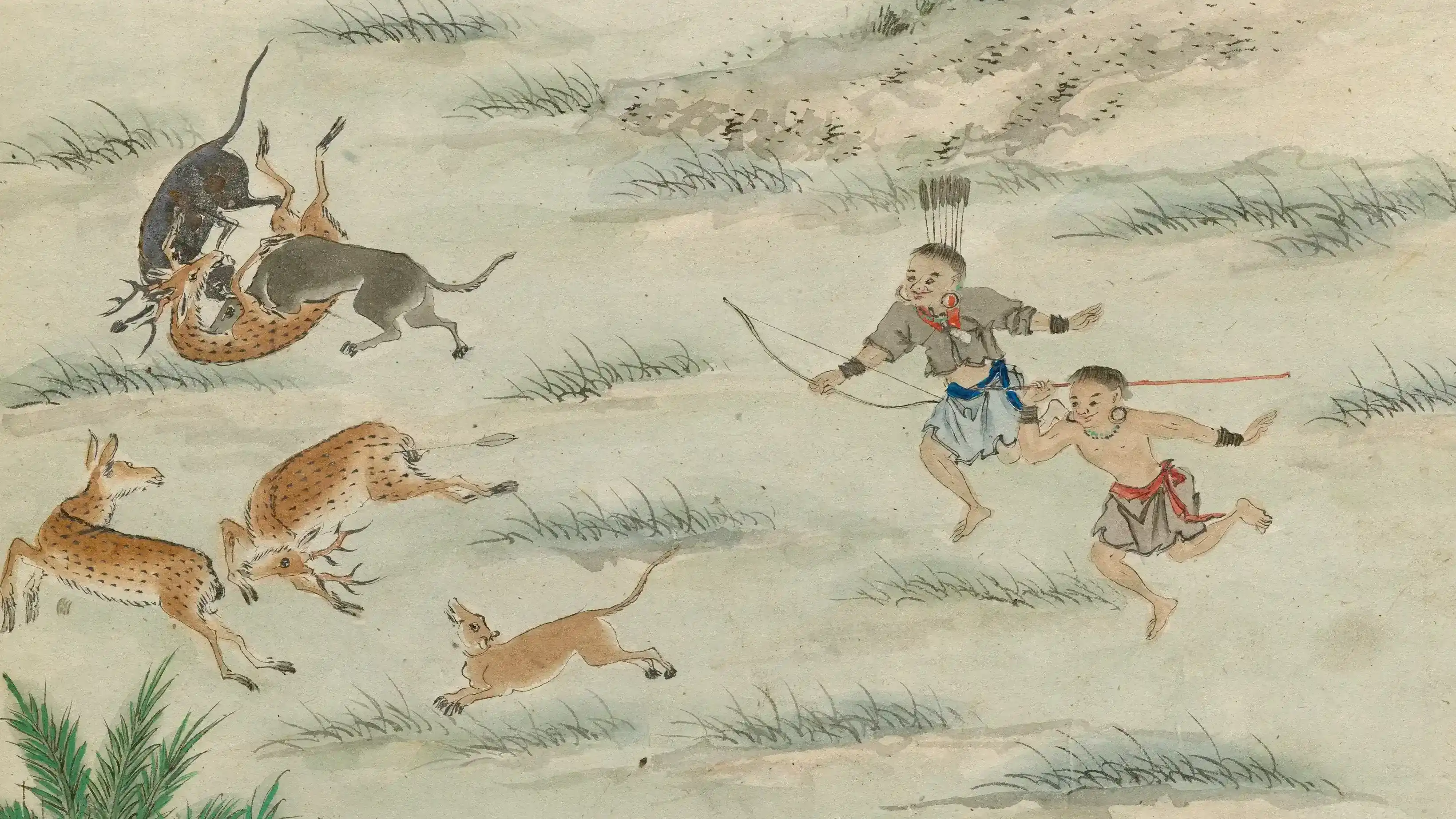
「東番夷人不知所自始,居彭湖外洋海島中......。斷續凡千餘里,種類甚蕃。別為社,社或千人、或五六百,無酋長,子女多者眾雄之,聽其號令。......男子剪髮,留數寸,披垂,女子則否。男子穿耳,女子斷齒,以為飾也。地多竹,大數拱,長十丈。伐竹搆屋,茨以茅,廣長數雉。族又共屋,一區稍大,曰公廨;少壯未娶者,曹居之。議事必於公廨,調發易也。」
“
”
Can ordinary people change history?
On March 23, 1996, when many people in Taiwan walked into polling stations, they may have felt that they were making history. That day marked the island’s first direct presidential election, with over 10 million people venturing out to cast their votes.International media from around the world arrived, drawn by curiosity about this seemingly improbable emerging democratic nation.
如同列舉的原住民畫作一樣,它們固然留下了珍貴的紀錄,但終究是來自外人的視角。
Not long ago, this country had been under martial law—a regime that had lasted 38 years since 1949. During this period, citizens’ rights to express political opinions were severely curtailed; freedoms such as publishing newspapers or forming political parties were restricted. Criticizing the authorities or voicing dissent could lead to arrest, imprisonment, or even death.
在當時當地原住民的記憶裡,沈有容驅逐倭寇有可能被視為「兩群有大船的人在潟湖爭鬥」的事件。
事件本身不見得很要緊,但在一定的人身經驗限度內,或可作為一種時間標記,例如「颱風特別嚴重的那個夏天」或「北邊的人偷襲我們的那個新月」,在口傳裡短暫留痕,然後隨一代人逝去而歸於塵土。
以文字記載為基礎的文明歷史觀,和以人身經驗為基準的原住民口述傳統,是兩種悖反的世界觀。
這意味著將原住民納入歷史的敘事框架,所得往往是「原住民相關的臺灣史」,不見得就撰述了從原住民觀點出發的原住民史。
真正的臺灣原住民史觀才剛起步,發展與實踐都需要時間,我們無法現在就提出理想的敘事,但我們試圖在此突顯這道尚待跨越的鴻溝,並指出可能的整合方向。
究竟從何做起呢?
也許我們得先將目光自今日備受推崇的宏觀視野移開,不在世界史的結構下觀察臺灣,單純從島上原住民的角度來思考——
在所有外來者未到之先,臺灣島上居民如何理解自己的世界?
Next section
島民自述起源
scroll to continue
1
Under the Shadow of Empire
Yet, the presidential election was not simply a tale of triumph and jubilation. On the eve of the 1996 election, the specter of war loomed over the Taiwan Strait.
In July 1995, Lee Teng-hui—then the incumbent president—visited the United States and delivered a speech entitled “Always in My Heart” at his alma mater, Cornell University, where he elaborated on Taiwan’s evolving democratic journey. The People’s Republic of China (PRC)—which has long sought to annex Taiwan since it defeated the Kuomintang during the Chinese Civil War in 1949, prompting the latter to flee to the island—responded vehemently by launching a series of military exercises near the Taiwan Strait.A year before the incident, a best-selling book titled The August of Leap Year 1995 had swept through Taiwanese society.
The book detailed a hypothetical plan and process for a Chinese Communist invasion of Taiwan. According to the author, the Chinese Communist Party (CCP) had long planted operatives in Taiwan, waiting for the day of the presidential election—dubbed "T-Day Zero Hour"—to initiate a coordinated coup from both inside and out, seizing control of Taiwan in one fell swoop.
達悟人之島西邊約 70 公里還有一座島嶼,地圖上標記為「臺灣」,相比之下是非常大的島,兩者面積比約為 1:790。若把達悟人之島想像成一枚郵票,臺灣就約當一個中等大小的玄關腳踏墊。在世界地圖上數算,臺灣是全球第 39 大島,居住在這麼大的島上,就不見得能像達悟人那樣,清楚意識到自己是島民。不是每個臺灣原住民族的語彙裡都有「島」這個字,恰好說明了這一點。

1933 年日本政府繪製的〈紅頭嶼略圖〉。紅頭嶼為蘭嶼舊稱,從地圖右上方可見臺灣本島與紅頭嶼間的地理位置關係,也可看出臺灣和蘭嶼的面積比差異。
毛利之俊/CC BY-NC 3.0 TW +/國立臺東生活美學館
圍繞臺灣島原住民的謎團不少,但至少有一件事是肯定的——和棲身汪洋小嶼的達悟人不同,臺灣島上的原住民似乎都不是遠洋航海的民族。
或許是因為長久以來,島民的對外活動被西側陰晴不定的海域(臺灣海峽)和東方寬廣強勁的洋流(黑潮)所限制。又或許單純因為臺灣是個大而富饒的島嶼,能夠滿足許多人群在島上自給生活。
這些人群現在被稱為「南島語族」,是日本統治初期以語言而非人的親緣所做的分類。基因研究顯示臺灣島上的原住民族沒有單一共同的起源,也無從推知各個群體長時間內如何遷徙分布。不過,撇開科學研究,臺灣原住民又怎麼解釋自己的起源?


具有石生傳說的族群




具有洪水傳說的族群

Next section
島民與環境的互動
scroll to continue

2
Divided Stances,
Contested Memories
Contested Memories
The 1996 election also revealed deep divisions within Taiwanese society.
Four pairs of candidates took part, each representing different ethnic backgrounds, political ideologies, and visions for Taiwan's future. Their stances ranged from advocating unification with mainland China to favoring independence, and from emphasizing Chinese identity to asserting Taiwan's subjectivity. This not only demonstrated Taiwan's social diversity but also reflected its complex political spectrum.


儘管這一圖像十分有趣,卻忽略原住民族傳統上並沒有將某些東西歸類為動物、某些東西屬於植物,進而統合在一個生物學分類樹下的思考。原住民看待周遭的一切,從石頭到樹木到昆蟲到走獸,其實都是一對一的、個別的關係。
以動物來說,各族語言中最接近「動物」的統稱性詞彙大概是「獵物」,但並非所有動物都是獵物,那些不屬於獵物的動物可能有名字,也可能沒有名字。取名與否,往往反映原住民族與這些動物的互動與關係疏密。
原住民族的知識與生活經驗高度相關,在不同的族群之間,看似相同的傳說與習俗也有所差異。


以
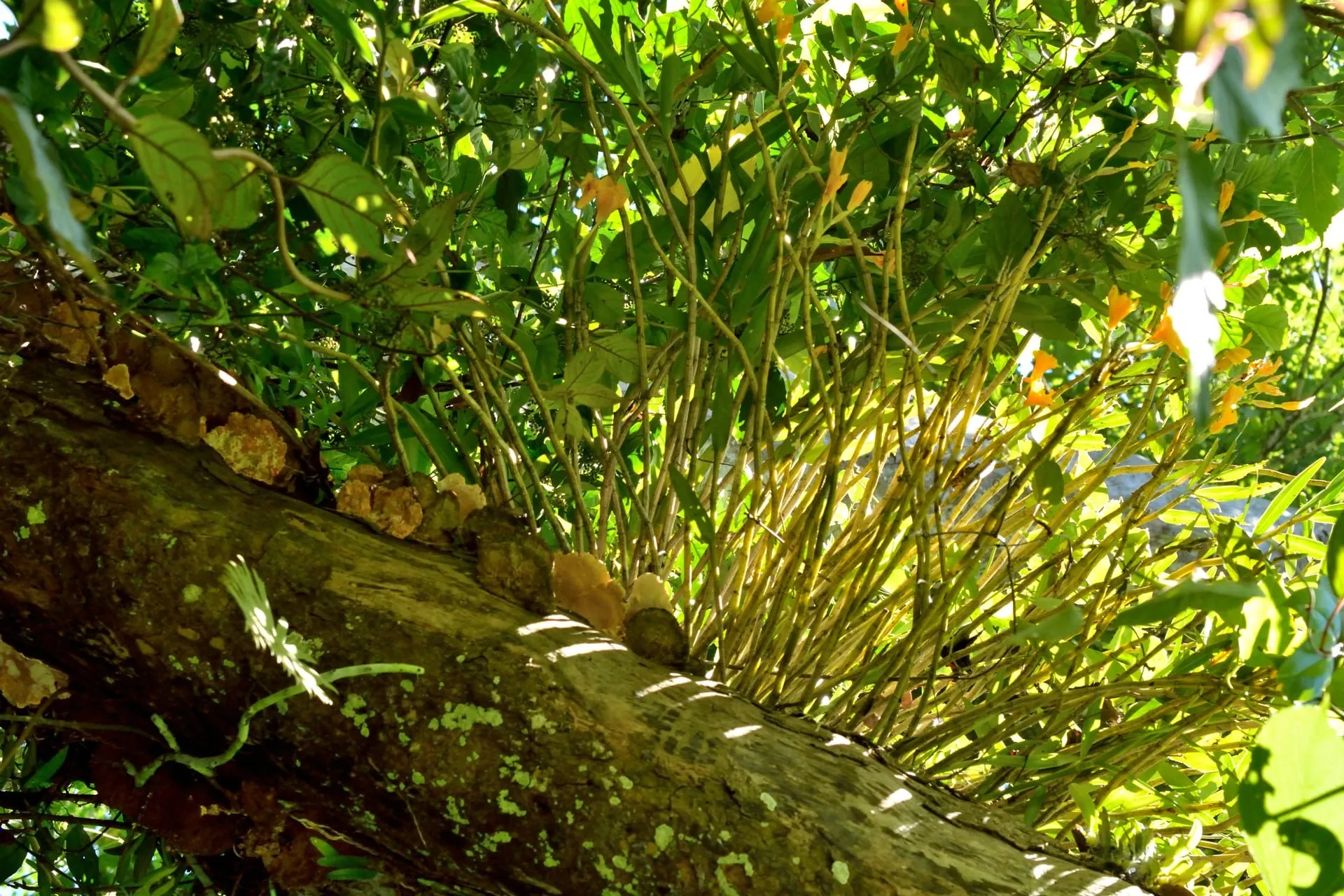
「紅嘴黑鵯」為例,泰雅族認為這種名為 sabin 的鳥曾以嘴和爪折斷樹枝,協助撲滅森林大火;布農族和鄒族也有類似的傳說,且彼此可相印證,大意是布農與鄒的祖先在玉山頂上避水,沒有火種,無法煮食取暖,其他動物幫忙去取火種都失敗了,最後是紅嘴黑鵯(布農稱為 haipis,鄒稱為 uhngu)成功帶回火種。
這些與動植物有關的傳說故事,是外界認識原住民文化的敘事起點,但外人也很容易忽略,傳說故事也有位階或效力的區別。例如泰雅族關於紅嘴黑鵯的故事,本質上是以傳說解釋外在事物的樣貌,布農與鄒的故事雖然也以火燒來解釋紅嘴黑鵯全身黑羽、紅喙紅爪的由來,但因為「洪水傳說」與「祖源」相牽連,在這樣的故事裡出現的紅嘴黑鵯,自然在族人心中占有特殊地位。
另一個例子是鳥占。許多民族都有鳥占的習慣,也就是以某些特定鳥類的叫聲或活動來判斷吉凶。不過,鳥占和其他習俗一樣,有相當的地域差別,不能一概而論,即使說著同樣語言的人群當中,占卜鳥的種類和鳥占方式也可能隨部落而有別(
繡眼畫眉

、
蘭嶼角鴞)。
原住民族本是高度仰賴環境資源的自給人群,因此知識必與群體生存息息相關,迥異於講究分辨物種「本質」的當代科學體系。這點除了體現在取名與否,也體現於名稱的細緻程度。
比如阿美族以其食用植物知識為特色,但並非對周遭所有植物都有命名。各民族對於植物的認識,大體上以實用為依歸,具有重要性的植物會有名字,甚至某類物種的各部位若有不同用途,也可能被分別命名(
檳榔樹、
五節芒)。
從現代社會的角度來看,這些命名的樣態似乎雜亂難解,因而更突顯原住民傳統上對世界的認識迥異於現代社會。
那麼,涵容一切的地理空間本身,在島民眼中又是如何?
Next section
島、島民與空間
scroll to continue

3
A History of Bitterness
角板山 Hapun 社的原住民。
Lafayette Digital Repository
In 1964, the same year that Peng Ming-min published the “Declaration of Formosan Self-Salvation,” the exiled Taiwanese intellectual Wang Yu-de, living in Japan, published the book Taiwan: A History of Bitterness in Japanese. This book was not published in Taiwan until many years later, but it had already been translated and circulated privately, as it resonated deeply with many Taiwanese exiles who shared his experience of displacement.
Bitterness and misery, tears and sweat—in those repressive times, such narratives often became the primary framework for understanding Taiwan's history. But, is Taiwan's history solely one of suffering?
As the era of openness unfolded, it became increasingly evident that, while Taiwan’s past is indelibly marked by prolonged hardship, its people also have ventured into new territories, pursued their dreams, fought with courage, and even in darkness, found laughter and hope to hold.


In the second half of the 20th century, Taiwan’s history gradually emerged as a field of academic research. With generations of scholars contributing their insights, the body of work has been impressive—not only in the traditional domains of political and military history, but also in new fields such as social, cultural, and environmental history. Moreover, the discovery of new sources—including archaeological finds, oral histories, archival materials, and visual records—has greatly enriched our understanding of Taiwan's past.
Every era demands a fresh perspective on its past. The question, then, is how to reexamine and reinterpret Taiwan's history through a new lens.
原住民各族的差異極大,若我們還是想試談原住民族視角下的原住民族歷史,可以從何處著手呢?由於篇幅有限,我們無法細論所有民族,以下只舉兩例來說明發展原住民族觀點之原住民族史的可能起點。
Next section
口傳與文字共構真實
scroll to continue